2025 by the numbers
Odometers
The original category I’ve been tracking for a few years now because I like to compare my biking vs driving miles. It’s gotten more interesting to track since we got an electric car and a solar setup.
Cars
First up, the cars:
- 3285 miles in our adventure van, mostly for skiing.
- Averaged 22.6 MPG, which works out to about 145 gallons of fuel…
- … guessing an average price of $5 / gallon in California means about $726 in fuel costs.
- Insurance is $2246 / year.
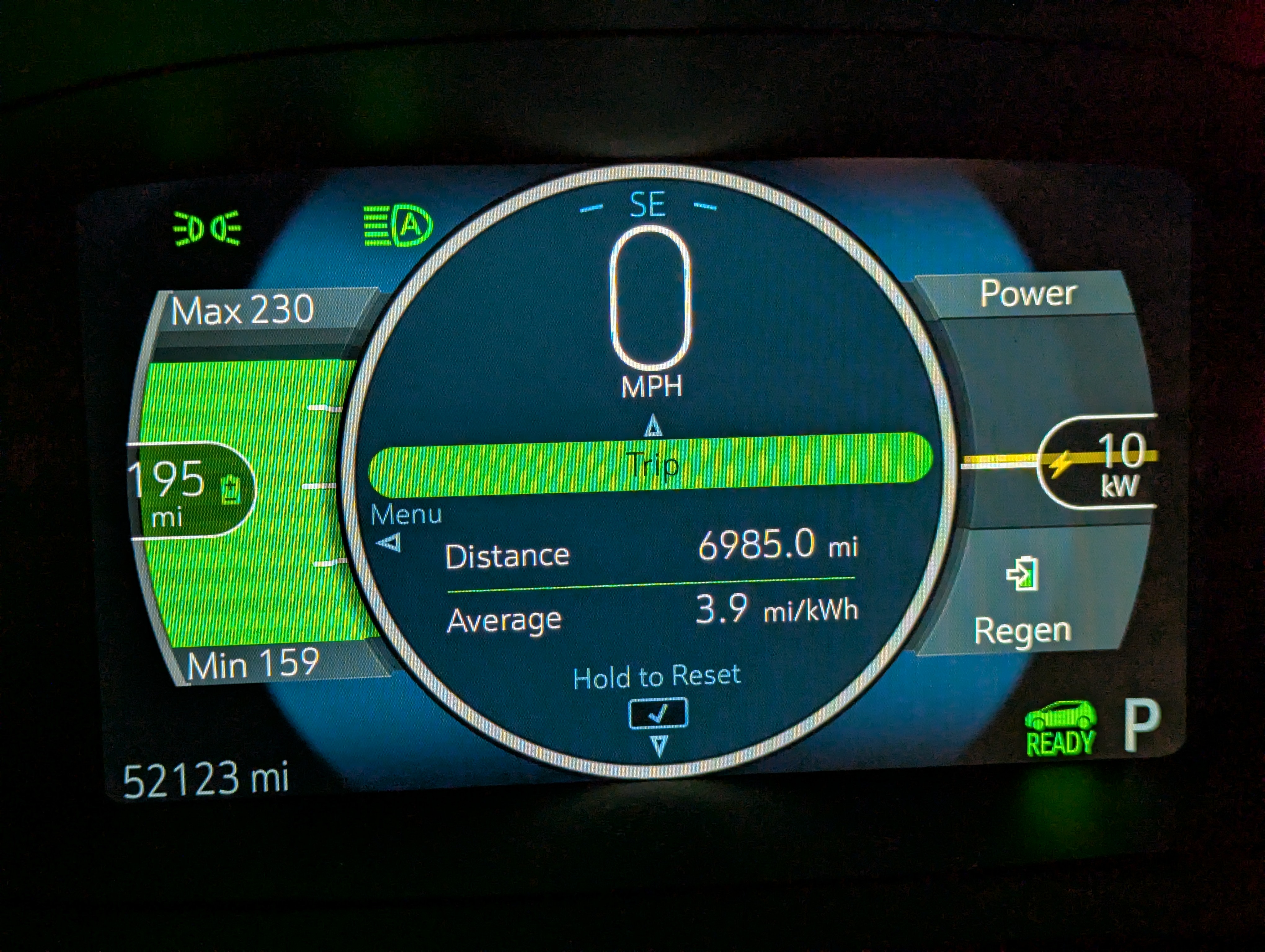
- 6985 miles in our Chevy Bolt, which is our “daily” driver (more like
semi-weekly).
- Averaged 3.9 mi/kWh, so 1791 kWh or 1.79 MWh (!!)
- Insurance is $2750 / year.
Figuring out where this electricity came from is a bit of an exercise, since I charge at home and at work. When charging at home, my SPAN smart panel is typically set up so that it will only charge the car after the house battery is full, and I typically do not pull from the grid.
This strategy works most of the year, but in the winter time, there are stretches where I do need to import from the grid specifically to charge the car, so I reconfigure SPAN to pull from the grid.
The net is that almost all of my car charging actually comes from my own solar panels, thus making our Bolt extremely clean to operate.
Anyway…
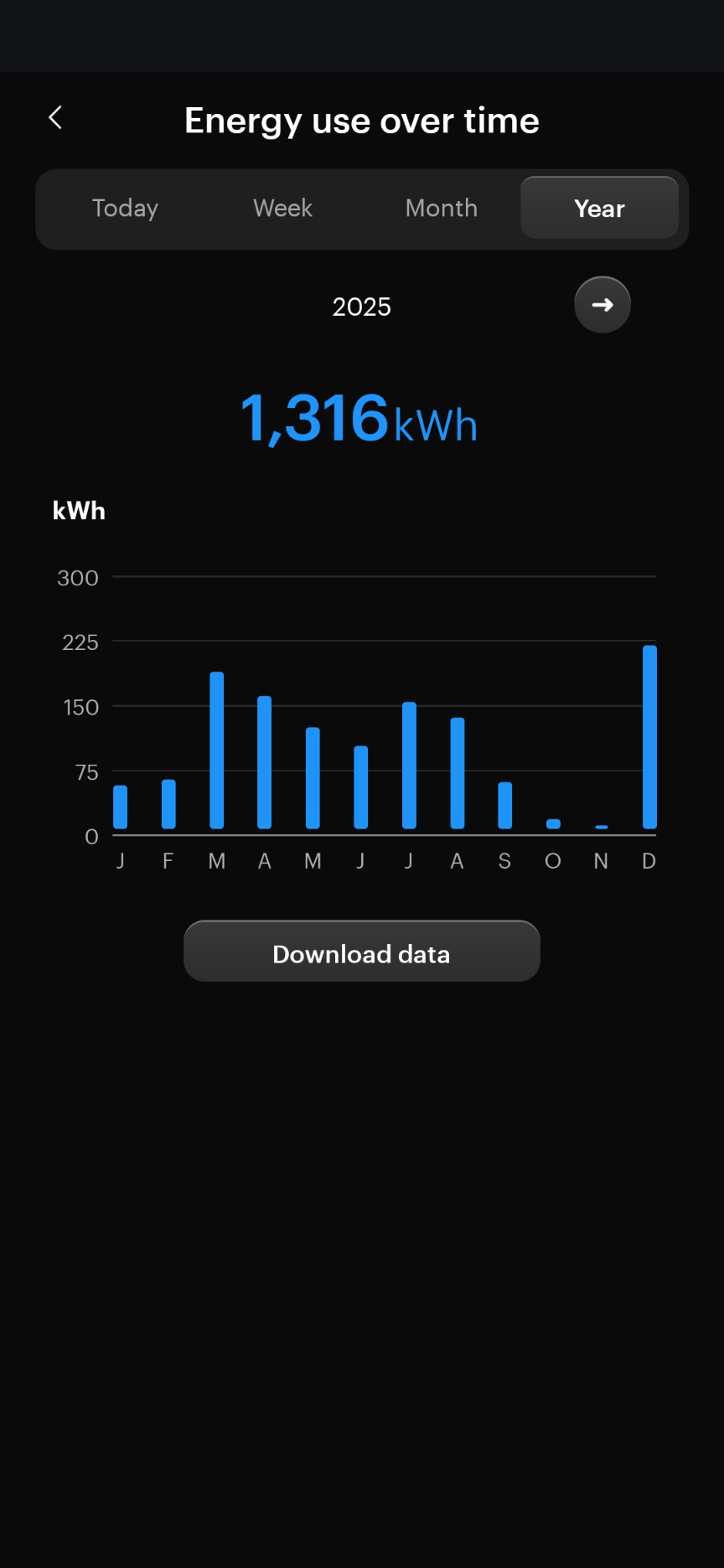
- SPAN tells me this circuit used 1.31 MWh in 2025, but it doesn’t give me a breakdown of grid import vs self-generation.
- My best guess is that we imported ~347 kWh (Jan, Feb, Dec), since those are the months where we don’t generate enough to both charge the house battery and the car. At $0.31 / kWh (PGE’s E-ELEC winter off-peak rates), that works out to $108.
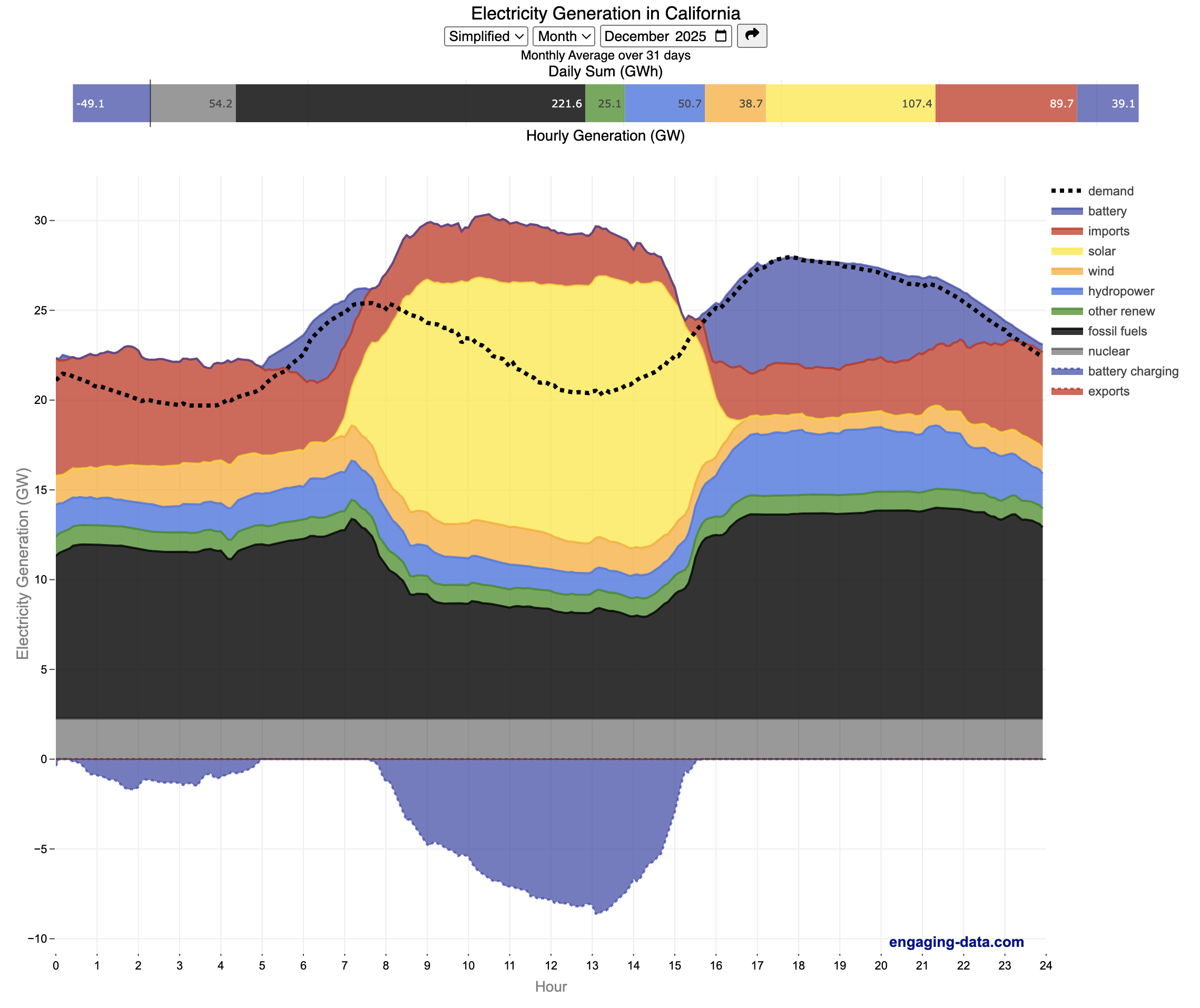
- The missing 480 kWh came from charging at work, but even in December, the California grid is still pretty darn clean.
In total, the adventure van cost $0.90 per mile to operate and the EV cost $0.41 per mile to operate, so 50% cheaper to drive.
Bikes
Next are the bikes.
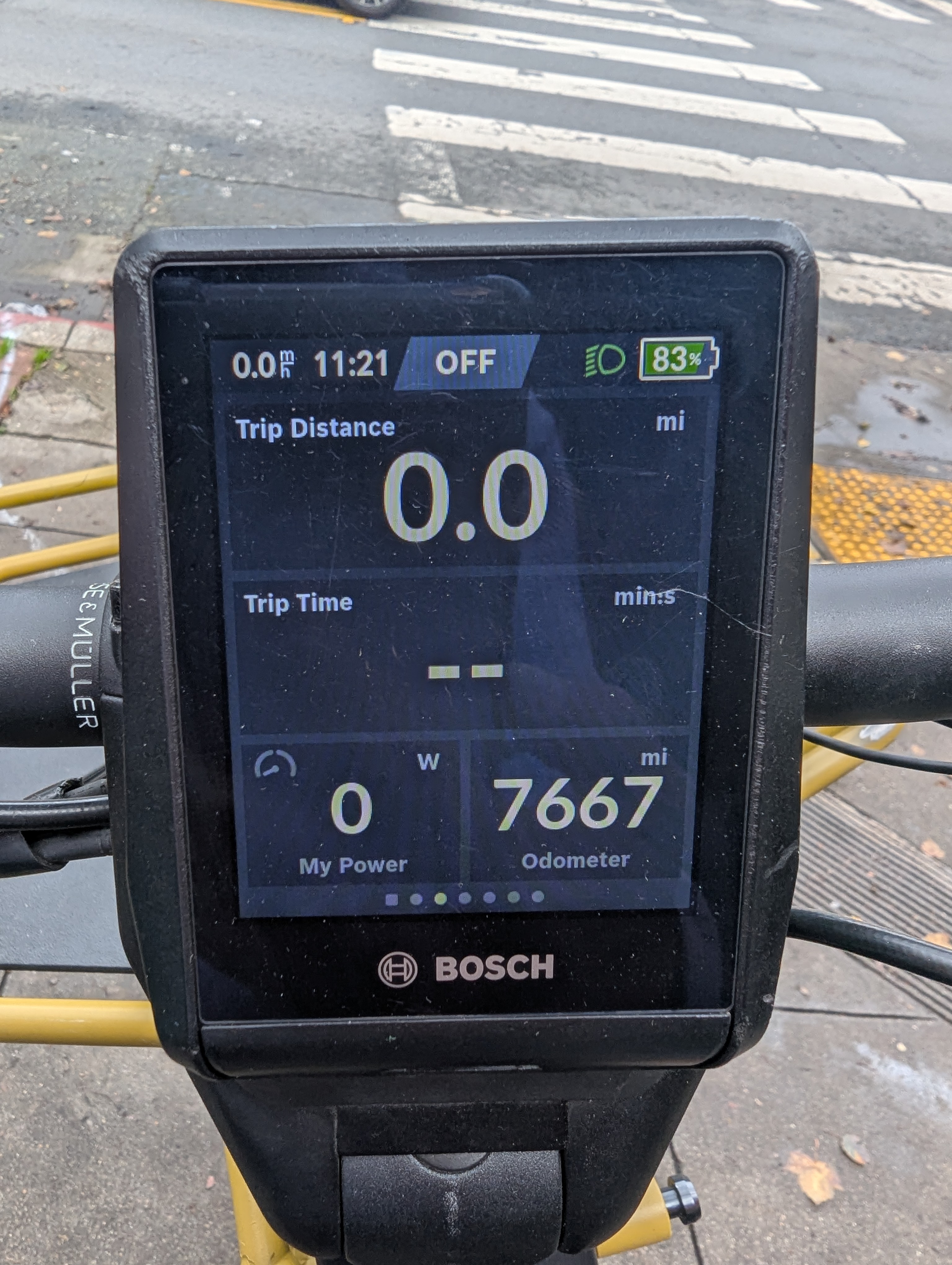
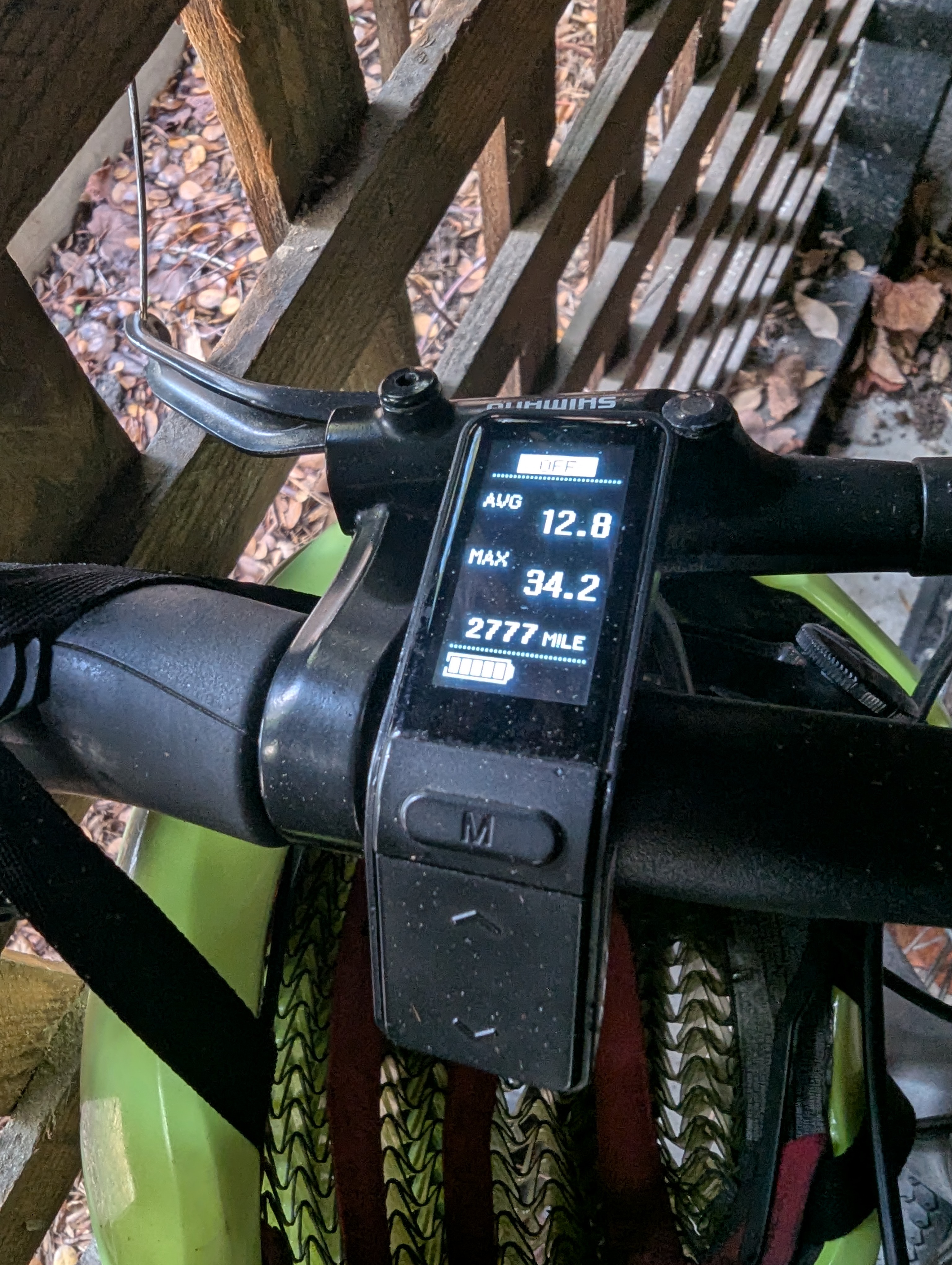
- Riese & Müller Multicharger electric cargo bike: 1816 miles
- Ride1Up Roadster v2: 1136 miles
This doesn’t include any recreational bike miles.
The total then, is 2952 bike commuter miles.
Summary
Total commuter mileage: 13222
Broken down by distance, that’s 22% by bike and 78% by car. I don’t have a frequency breakdown though, and while that’d be interesting to look at, I don’t have a painless way to collect the data.
Exercise
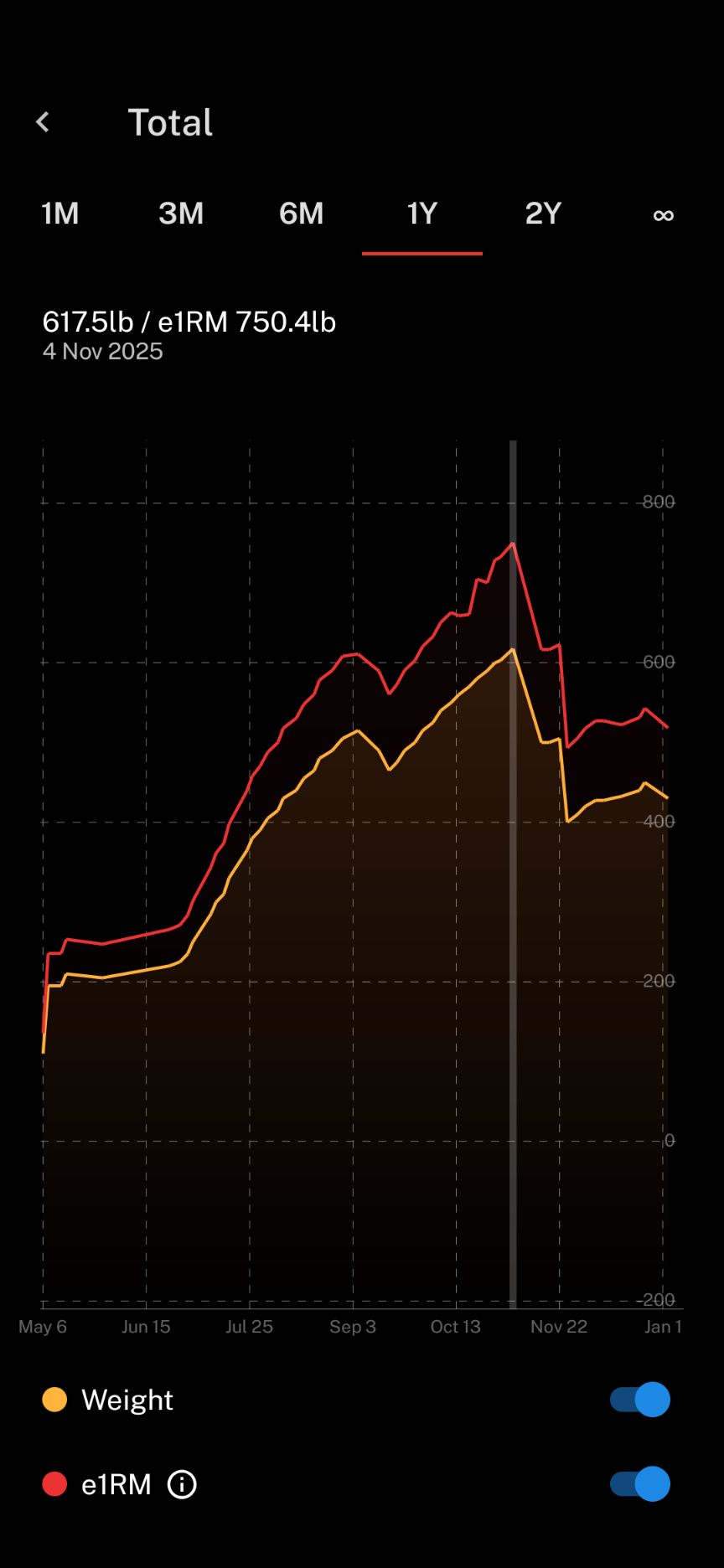
My cumulative training hours took a dip in 2025, but my overall training load was about the same.


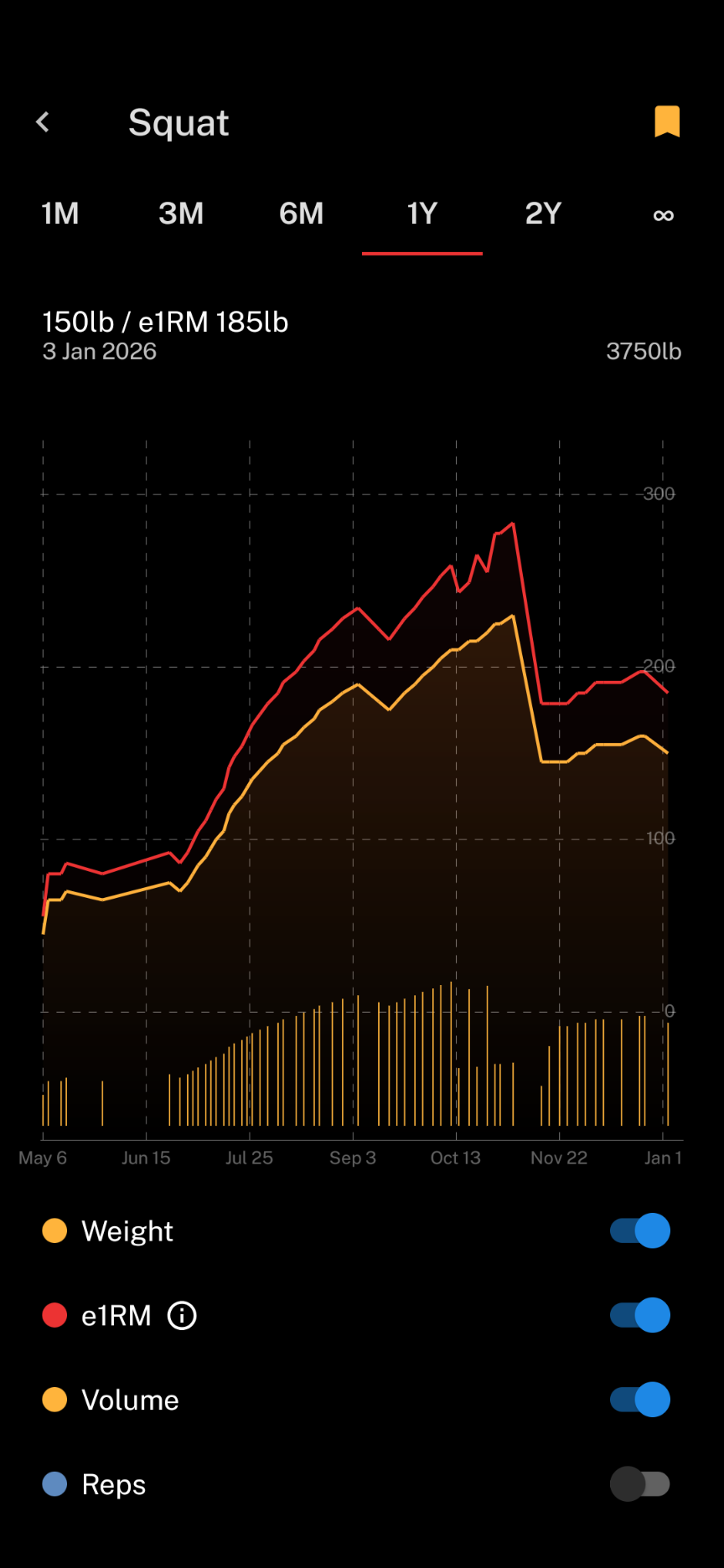
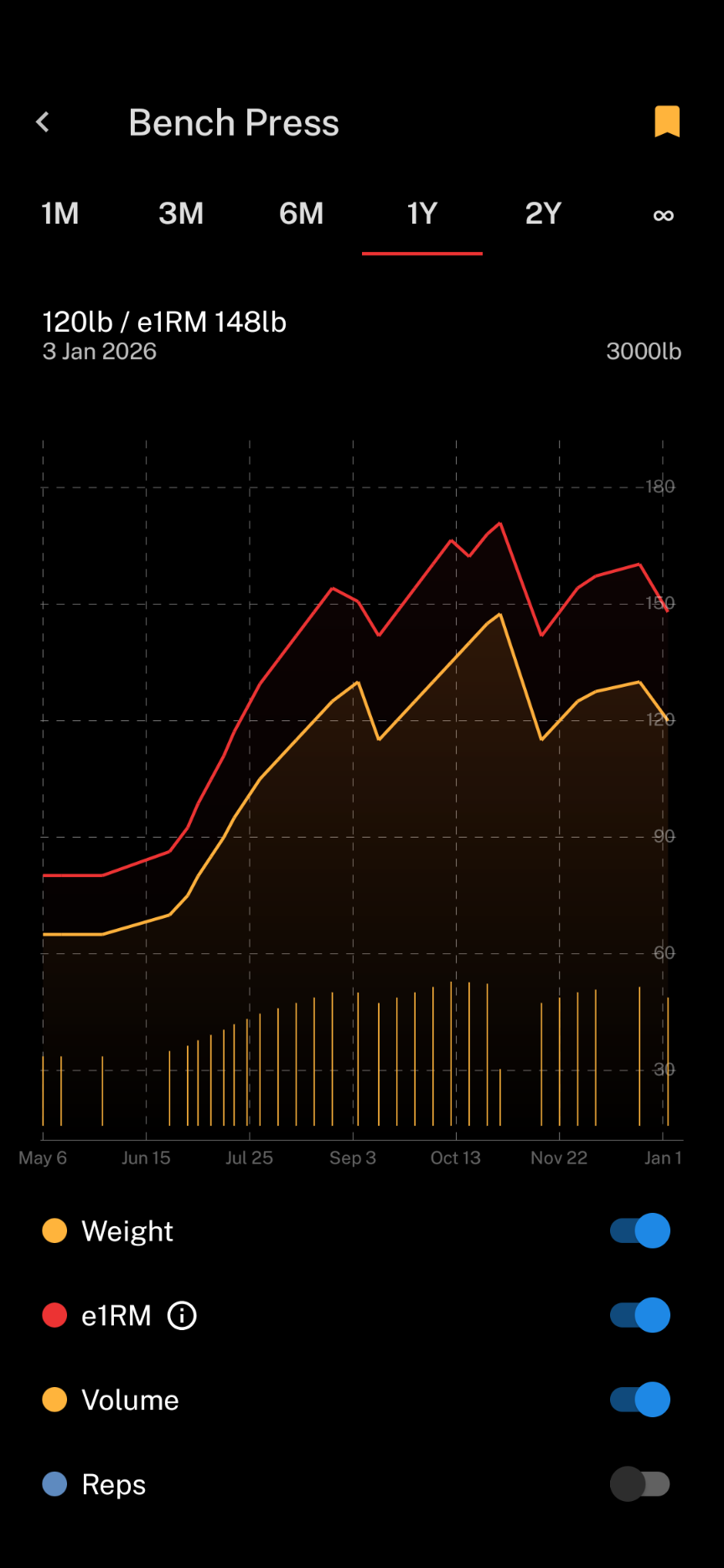
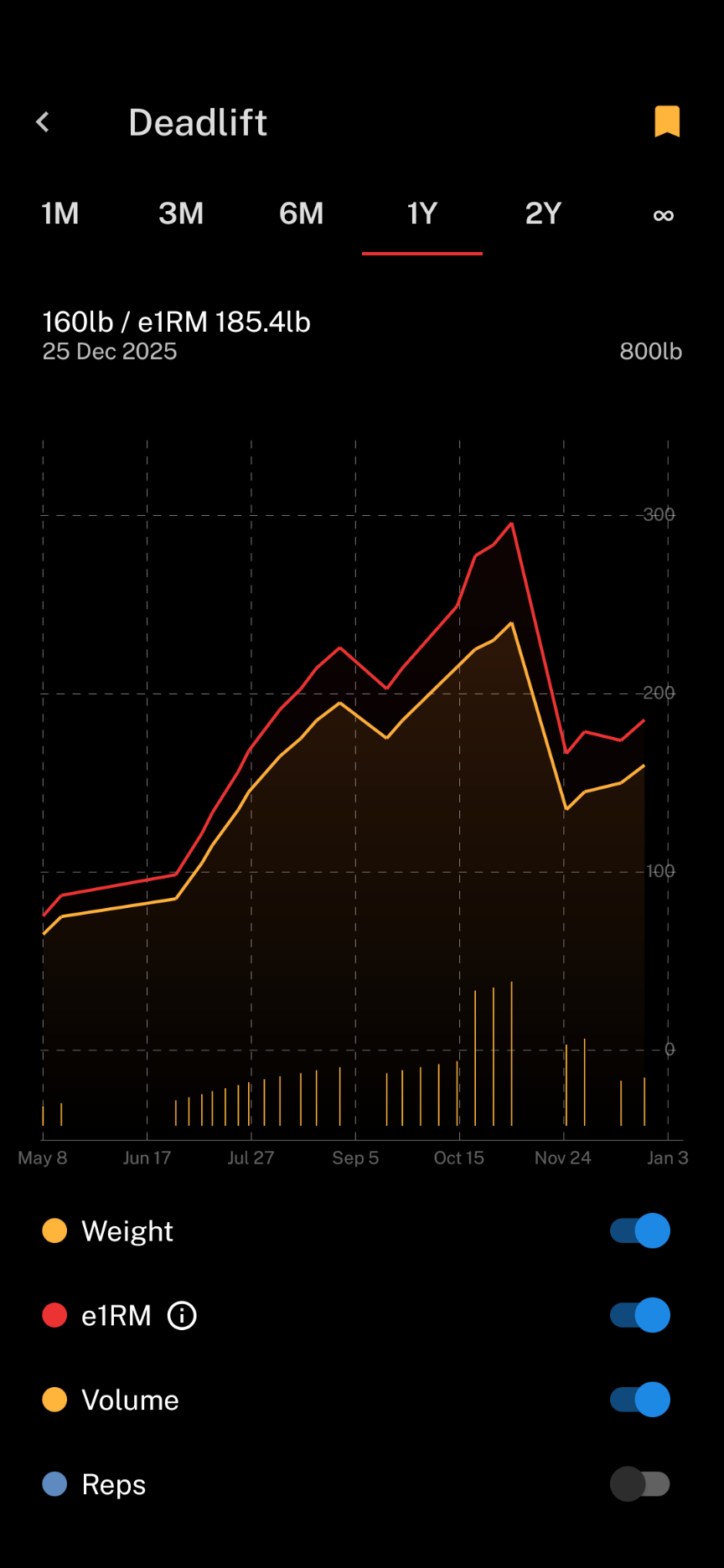
This is because I started lifting weights again, which I haven’t seriously done in probably over a decade. I went with the stronglifts program, with the goal of getting stronger and building lean muscle mass while I still can.
As is common, the early days of the program were fun and motivating as it was easy to make gains every session. I progressed quite steadily for multiple weeks, and then in November, as is common, I injured myself deadlifting and had a hard time even bending over for over a week. This was super disappointing, since I’ve always been able to deadlift quite heavy.
I eventually recovered on my own simply by resting, but I learned an important lesson, which is to have clear goals in mind. And for me, the goal is not to set PRs every session, but rather to maintain a solid baseline of strength, which does not require maxing out constantly.
You can see from the graphs that I’m slowly building back up, and also repeating weights for multiple sessions before adding more. Slow and steady is the name of the game here.
Books
This was not a good year for reading, as I only managed to finish two books at all:
- The Ancients, by John Larison
- The Unaccountability Machine, by Dan Davies
What I can say is that the Unaccountability Machine is really powerful in terms of helping me better understand the world through its lens of cybernetics. Highly recommended to anyone interested in systems-level thinking.
Solar
This was the first year that we had solar!
I learned quite a lot. But first the stats.
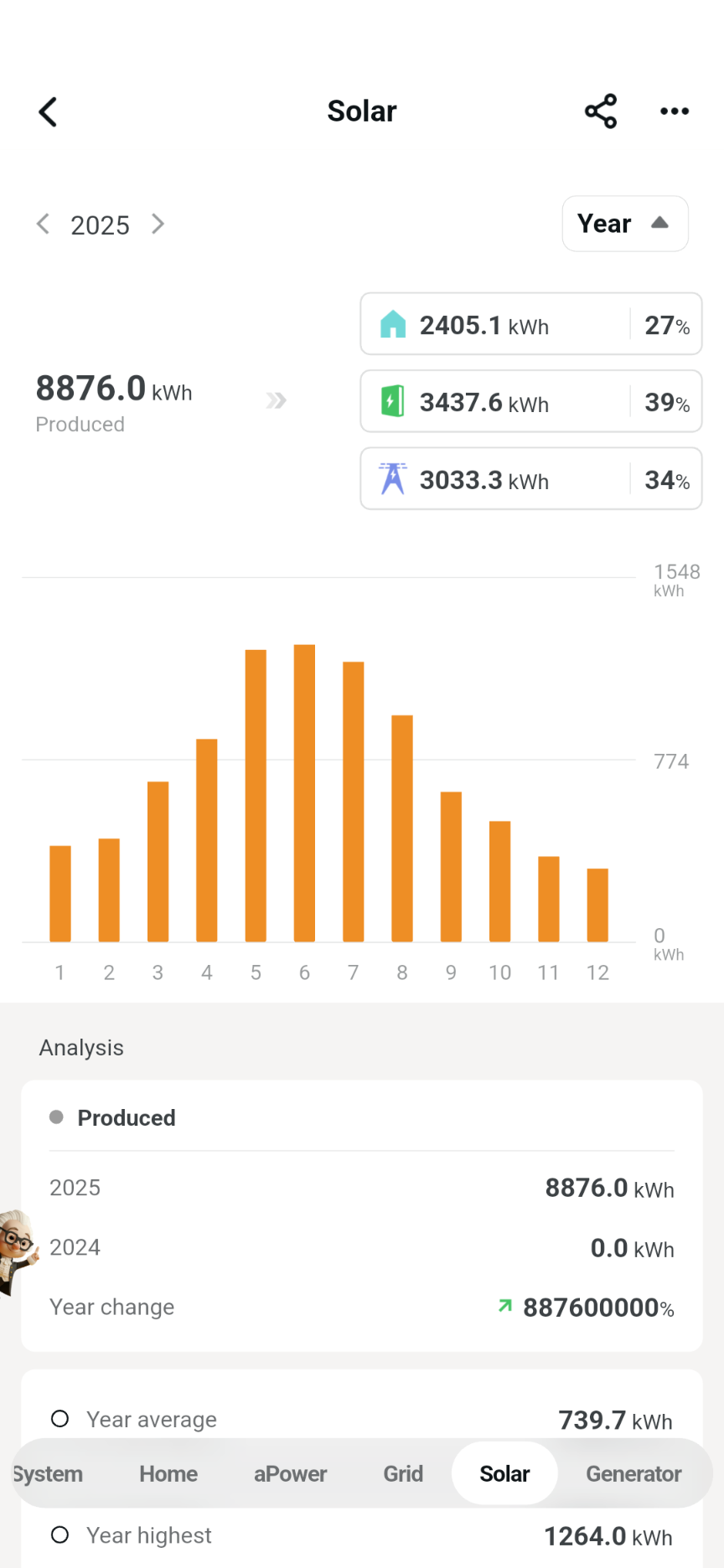
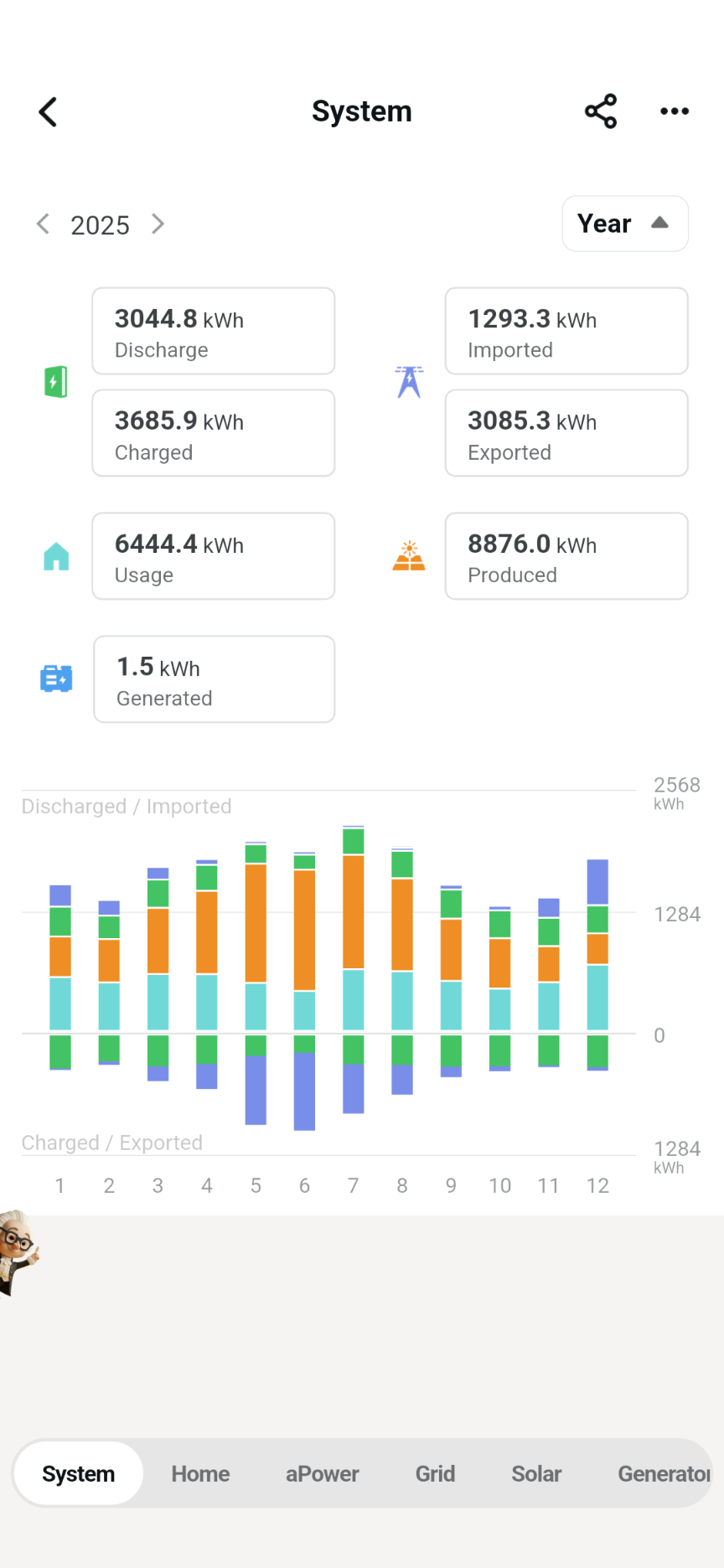
Generated 8.8 MWh off a 7.4kW array.
- Directly consumed 2.4 MWh
- Stored 3.4 MWh in our battery
- Exported 2 MWh back to the grid
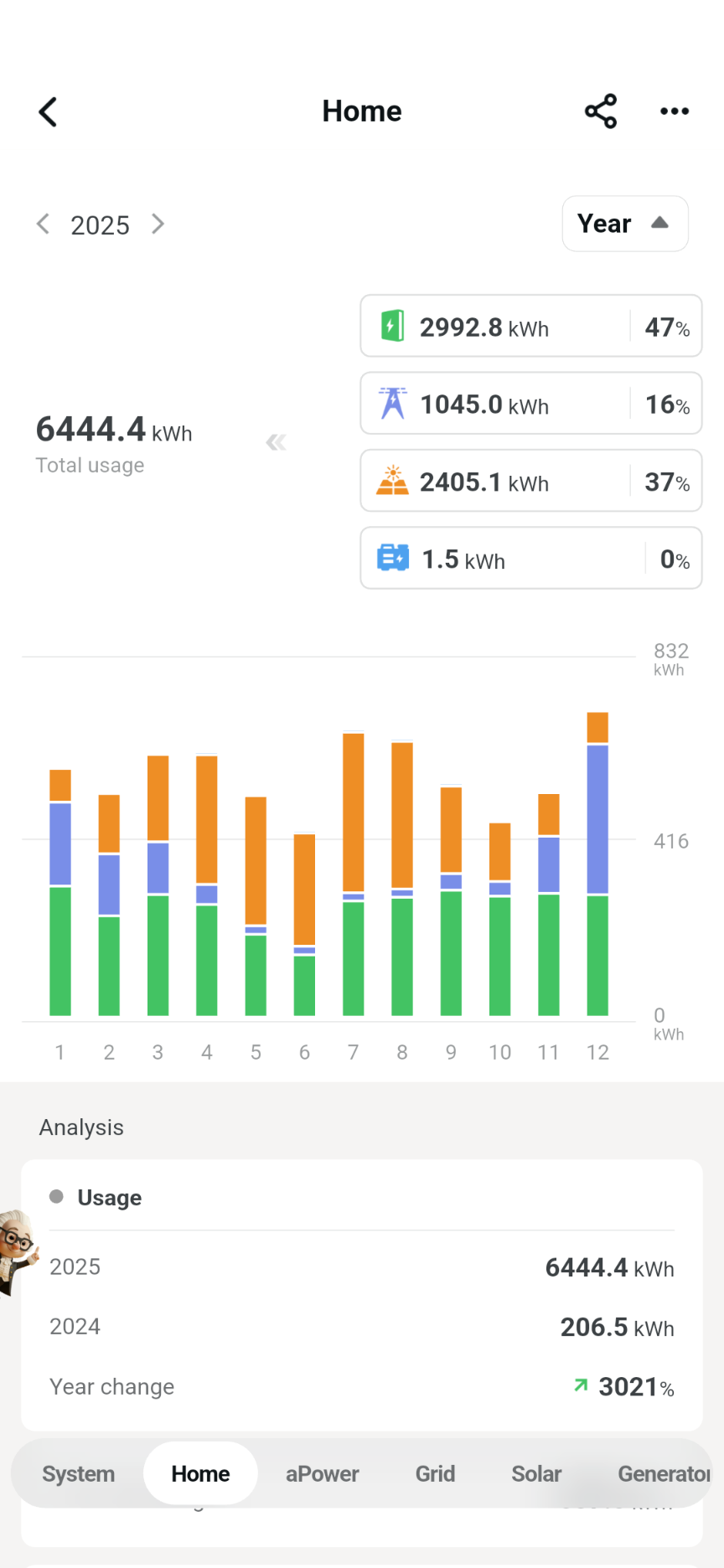
Our actual usage was 6.4 MWh, which doesn’t align exactly with the numbers above, because our battery is not big enough to cover 100% of our needs 100% of the time, so we ended up importing from the grid during the winter months.
- Direct solar consumption: 2.4 MWh
- Pulling from the battery: 2.9 MWh
- Grid import: 1.0 MWh
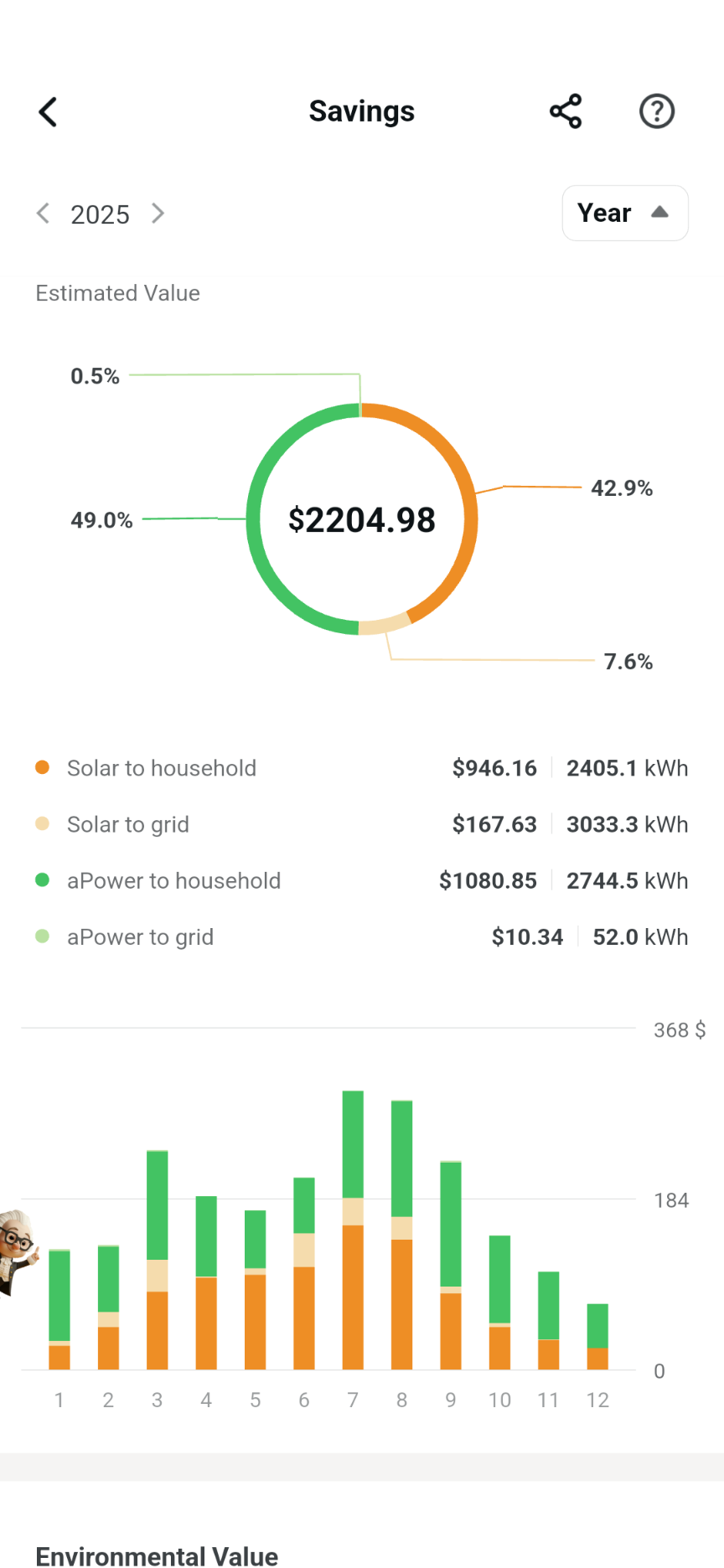
The app estimates we saved about $2200 in energy costs, which feels approximately correct. The payback period for this installation is unfortunately still extremly long, but hey, we avoided creating 3.4 tons of CO2. In California, that seems to be worth about $25 per ton at cap-and-trade auctions, so I’m going to claim an additional $85 of value.
So what did I learn in my first year of solar?
I was (predictably) obsessed with the stats generated by the system for the first 6 months, constantly checking in on the various apps to see what was going on. But after a while, I mostly stopped worrying about it.
I ran the battery down to 5% reserve for most of the year to maximize cost savings, but at times, when major storm warnings occurred, I bumped the reserve up to 70% to hedge against a grid outage. We got pretty lucky here, never actually losing grid power, but it was nice peace of mind.
Our usage is fairly consistent the entire year. We don’t have an A/C, and we have a gas furnace, whose electric blower consumes about 1 kW when running. Our system isn’t sized to cover the winter months – our 7.4 kW array isn’t big enough to fully charge our 13 kWh battery, and a 13 kWh battery wouldn’t cover our daily usage.
If we really wanted to be fully self-sufficient during the winter months, we’d need to double our storage capacity and probably triple our generation capacity, both of which would be extremely cost-prohibitive in 2025 prices. Plus, I’m still waiting for the EV industry to standardize their V2H implementations because it seems criminal to pay $20K for a 13 kWh battery when it’s possible to buy an F-150 Lightning with a 100+ kWh battery for $60K and you can haul mulch with it.
What is shocking is how utterly wasteful driving is. My car commute is ~20 miles round trip, which requires 5.1 kWh of electricity, while the entire house consumes between 10 – 15 kWh per day.
It’s depressing to see how energy intensive it is to move that much mass around.